

Previous chapter / Next chapter / Start at the beginning
September rolled around, and a few forest fires were still burning, including one that simply wouldn’t submit to the efforts of the fire crews. It was logged as “Fire 6”, and on September 3rd , 1971, tragedy struck. A helicopter crashed south of Great Slave Lake, near a small community called Pine Point. The pilot survived the impact, but the crash was deep inside the fire zone. Two water bombers – a Catalina and a Canso – began circling overhead, water-bombing the area in an effort to keep the flames back until another helicopter could get in to rescue him. The two large aircraft collided midair, spiralling into the ground, the impact killing everyone aboard. A second helicopter eventually managed to reach the scene and rescued the downed pilot, the sole survivor. It was a devastating chain of events.
By the time the accident investigation team from the Department of Transportation in Ottawa arrived in Fort Smith, the fire had been suppressed enough for investigators to access the site. Walter flew them, along with members of the RCMP, to the point on the Slave River closest to the crash. A helicopter waited to take them the rest of the way, and Walter was instructed to remain there until their return.
The Slave River, like many of the rivers in the North, had clay banks – slimy, heavy clay that clung to boots. By the time the investigators had scrambled up the bank with their gear, they already looked worse for wear, and their work hadn’t even begun.
Walter waited all afternoon and into the evening. By the time he heard the helicopter return, dusk was settling in. He was flying the Otter that day, and it was not legal to fly a single-engine aircraft on a charter after dark. He knew he didn’t have time to get back to Fort Smith before nightfall. These were the thoughts running through his mind as he watched the DOT guys slithering back down the greasy clay bank, swatting at mosquitos and black flies that swarmed so thick a guy couldn’t help but breathe them in. Once they reached the plane, and clambered aboard, Walter said “Well, I guess we are here for the night.”
“Why?” one of them asked, alarmed.
“Single-engine, night flying,” Walter said. The official slapped at a mosquito that had followed him into the airplane.
“I’ve never heard of that,” he said, finally.
Walter pushed off from the river bank, started the engine, and headed for Fort Smith. By the time he approached Instant Lake, the sky was inky black; he couldn’t see a thing. He favoured the shoreline where the docks were, when Don – who had been waiting for him – jumped into one of the tied up planes and got on the radio.
“You’ve got about a forty-mile-an-hour crosswind blowing into the dock!” he said.
The Otter was coming in sideways, and Walter couldn’t see it because it was so dark. He was already at the level of the tree-tops, headed for a crash. He immediately rolled the Otter into the wind, a manoeuvre called a cross-control, using the rudder to sideslip the airplane in the direction he needed to go. The Otter responded, and he landed. At the dock, Don struggled to hold the airplane – the wind was really howling.
Once the Otter was secured and his passengers had disembarked, one of the investigators approached Walter. “I wonder if that’s the first time you’ve done that,” he said quietly. Walter took it as a compliment, but also as an invitation to talk – and possibly incriminate himself. He nodded, but said nothing. He knew better than to talk himself into a hole.
Each fall, as the days got shorter and the air cooler, Bob provided the occasional “goodwill flight” to friends and clients for hunting, fishing, or recreation. Bob flew some of these flights himself, and one day he took the 206 to drop friends at a fishing camp about 35 miles out of Fort Smith. After dropping them off, he made a low pass over the camp for a bit of flourish and clipped a tree with one wing. He managed to land safely back on the lake, but the wing was destroyed.
Bob immediately set about solving the problem. He leased another 206 and, as soon as it arrived at the base, removed its wing. He asked Walter to fly the wing up to the stranded aircraft at the lake. They lashed the wing nose-to-tail on the spreader bars under the Otter, and Walter set off with a mechanic. He learned quickly that a wing is still a wing, even when it’s laying flat; the airflow caught it badly. He wrestled the Otter the whole way to the lake. It was a relief to land and help mount the loaner wing onto the damaged 206. They were able to bring the 206 back to the base that day with the loaner wing, but the damaged wing also needed to be flown back. They flew the patched-up aircraft back that same day. But the busted wing still had to be transported out, and that seemingly straightforward task tested Walter’s abilities. He was glad when it was finally done.
The saga wasn’t finished. While the damaged wing was in Prince George for repairs, the original 206 flew with a mismatched wing, and the leased one sat on the apron with only one. A DOT inspector arrived unannounced for a random check of Buffalo’s operations. Walter knew Bob had featured in more than one DOT accident report, so it didn’t surprise him that the department was taking a keen interest in the new charter company.
The inspector poked around meticulously, making notes as he went. His inspection included the one-winged 206 – sure to raise some awkward questions. When he was finished, he gave his preliminary report to Bob. It listed several minor defects, including a few on the leased 206: an expired ration pack, and a compass card past due to be swung. There was no mention of the missing wing. Walter figured the inspector had come looking for small issues to catch them on, so he found small issues.
After the eventful summer, Walter welcomed the slower pace of fall. He enjoyed the easygoing atmosphere of the fishing and hunting trips he flew to various guide camps, and on the occasional weekend, he even got out himself. When Fred Cunningham was free for a weekend of fishing, he and Walter – and sometimes other friends – flew out to some of the well-known fishing spots in the area.
The Talhtan River had several great fishing holes, but one stretch in particular was a favourite. That was where Walter, Fred, and Jack headed one weekend. Fred and Jack’s wives joined them, and Walter flew everyone up in the Beaver. Their destination was a short span of the river that connects two lakes. The water there was wide, slow-moving, and a spawning ground for lake trout. The shoreline was dotted with huge boulders, some as large as Volkswagen beetles, which Walter and the other pilots jokingly referred to as “Texas sand”.
The nickname came from a story passed down from a pair of junior pilots who, a few years earlier, had been tasked with flying a group of American outdoor sports writers to that same fishing spot. They split the group between two Cessnas so they would have power to haul back the group with the added weight of the day’s catch. As the story went, the writers had spent much of the flight boasting about how big everything was in Texas. After the first pilot navigated through the rocks to shore, he radioed the second plane, “Come on in – it’s is a shingle beach,” both pilots knowing full well it wasn’t. The passengers, already a bit unnerved by the car-sized boulders, suddenly reconsidered the scale of the North as they taxied between the “gravel.”
Everyone had a good day of fishing, though the planes struggled to lift off under the weight of the fish. The pilots dubbed the boulders “Texas sand,” a light jab at their visitors. The resulting article had amused Walter; the two young pilots, both in their early twenties at the time, were described as “veteran bush pilots”, and the tale only got taller from there.
Walter and his friends enjoyed an equally successful day day of fishing on the river. They caught a load of fish, each one weighing about five or six pounds. Walter didn’t keep any, as he’d soon be leaving for the winter, but the others shared the catch with friends in town.
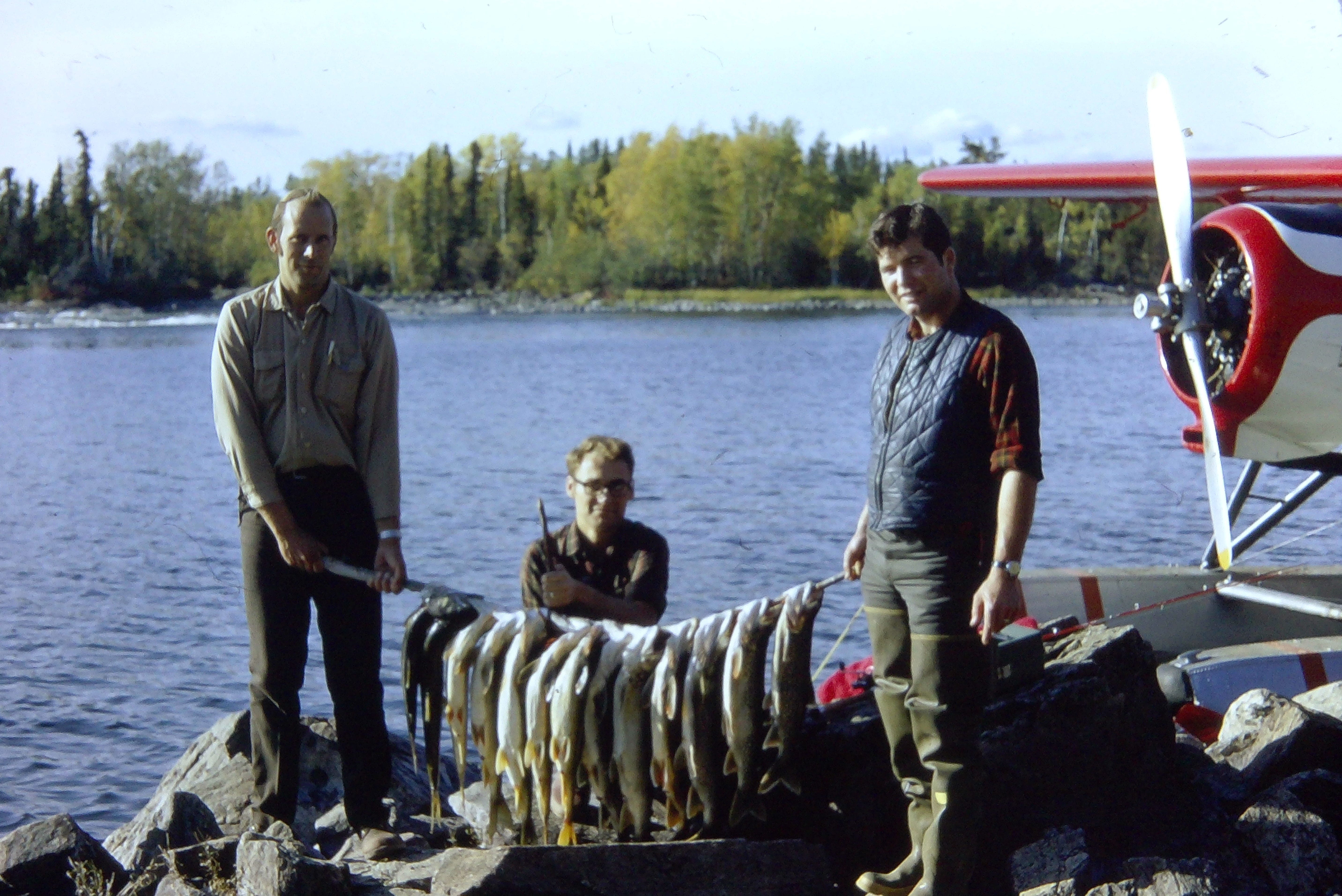
The next week, Bob asked Walter to take a group of Forestry guys out caribou hunting in the Otter. Spirits were high as he flew them out over the barren lands, and soon they spotted a large herd. Walter landed on a small lake along the herd’s path, there were a lot of rocks, but most were round and smooth. Walter picked his way in slowly, as it was a very windy day. He swung the Otter around the downwind side of a boulder that stuck out of the water, but he knew the lakebed was full of big, deceptively smooth-looking rocks. After the men disembarked and headed for the hunt, Walter inspected the floats and found that a rock had torn a hole in the bottom of one float’s main tank.
He tried draining the damaged tank with a hand pump, but the water level didn’t go down. The compartment held about 250 gallons, it was a big tank. The hunters returned, they’d shot five caribou. They dragged the carcasses down to the airplane, and loaded them. Walter calculated the wind would give him enough lift to take off despite the weight. If he could get even a bit of lift, the float would drain, and he could climb. He was wrong.
They reluctantly jettisoned the front quarters to lighten the load. He tried again. No luck. They threw out the hindquarters, and Walter was finally able to coax the Otter into the air. He was now low on fuel – he had made several attempts at full power to take off – and it was getting dark.
The nearest fuel cache was about 100 miles away at a forestry camp, way off their planned route, but he saw little choice. He headed there, and it was dark by the time they approached the lake. The camp was dark, and the lake was dark, landing required full concentration. By the time the Otter was secured on the shore, and Walter and his passengers were settled into the cabin, it was late, and they were still 175 miles from home.
In the morning, they rolled a barrel of fuel to the Otter. Walter pumped it into the tanks, then set about patching the float. There was a roll of poly plastic in the cabin, so Walter cut a piece off, pulled it under the float, and secured it. This time, pumping worked. The water pressure held the plastic over the gash long enough for him to drain some of the tank. Once airborne, the plastic tore off in the wind, but by then it didn’t matter. He flew the subdued hunting party back to Fort Smith. Walter had brought his passengers home safely, and that was always the main goal, but he felt bad about the whole thing. After two days, an extra barrel of fuel, and they had nothing but five caribou tongues to show for it. It was probably one of the most expensive tongue dinners ever had in the North, with all that meat left for the jackfish.
Walter didn’t have long to think about it. He received a call from his cousin Vern that flung him into action. Years earlier, he had looked at a parcel of land on the south side of Francois Lake during a visit with family. He’d asked Vern to keep an eye on the property, and give him a call if it ever went up for sale. This was that call. The land was now available, and Walter was still very interested. Ninety-three acres of forested land, with a long stretch of waterfront. Walter contacted the realtor the next day, and set the wheels in motion to buy the property.
The next time he saw Bob, he mentioned the property in BC, and the conversation turned to Walter’s future. He told Bob he wanted to return to BC, closer to home, maybe in a job that didn’t see him sleeping in his plane, and bathing in frigid lakes. Bob understood; Walter had worked his last season with Buffalo. When the season ended, Bob pulled him aside.
“The 206 has to go to Prince George for maintenance,” Bob said, “here’s a credit card for fuel. Go, buy your place, take the time you need, then take the plane to Prince George.” That was just the kind of guy Bob was. If there was a solution that could benefit everyone, he would find it.
Walter wrapped up a few things in Fort Smith before leaving. A guy he knew at Hydro wanted to buy his truck and camper, and Walter was glad to sell. The rig was in rough shape; northern roads had done it no favours. The camper’s corners had come apart, and he had already driven screws through them in an attempt to hold everything together. The truck’s suspension was no better. The brackets that held the rear springs – originally riveted to the frame – had shifted so much the holes had elongated, allowing the springs to move up and down nearly half again as much as they should. The buyer knew all of this. He drilled out the damaged areas for larger bolts, secured the brackets, repaired the camper’s corners, and, as far as Walter knew, managed to get some use out of it for a few more years.
Just before leaving town, Walter made a spontaneous purchase: a new camera. He was walking down the main street, when he spotted a shop window with cameras on display. He’d always been interested in photography, but only had a basic camera. He stepped into the shop, and an Asahi Pentax Spotmatic caught his eye. He knew those were very good cameras, and this one had a shockingly low price – it was dirt cheap. He asked if there was something wrong with the camera. The clerk shrugged. “We don’t think so.” Walter bought the camera. Either there was no market for good cameras, or the shop didn’t know what it had. Either way, he was pleased.
On October 10, 1971, Bob met him at the base, and signed off the hours Walter had flown for Buffalo Airways. Walter thanked Bob for the opportunity and the experience, and the men wished each other well. It was the end of a most interesting chapter for Walter.
With his new camera and his modest belongings loaded in, Walter flew the 206 to Southbank, on the south side of Francois Lake, to buy his property. He wasn’t a stranger in the community, he had lived in the area for three years when he worked as a teacher, but arriving in a Cessna 206 still made an impression.
Vern was especially impressed when Walter recruited him to help check the property’s boundaries. The lakeshore corner markers were visible, but there were no clear markers in the bush, at least not visible from the air. Walter had no enthusiasm for bushwhacking. Instead, he invited Vern along in the 206 and told him to bring a couple of rolls of toilet paper. They took off in the 206, and located the boundary marker just above the shoreline on Francois Lake.Walter knew the direction of the property lines, so he flew on a compass heading, when he had flown the appropriate amount of time to be half a mile from the marker, he asked Vern to toss a roll of toilet paper out the window. It streamed out in a line and drifted to the ground. They repeated this along each edge of the property. When they went back by foot, they still couldn’t find the corner stakes, but at least Walter could see where the corners should be. Vern thought that was a pretty novel and easy way to check the property boundary.
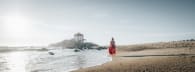
Walter had bought and sold properties before, but this one felt different. As he stood atop a bluff that overlooked the lake, and the pebble beach below, he could imagine having a house there one day.
After finalizing the sale, Walter spent another week visiting relatives before flying the 206 to Prince George. A small lake outside town served as the float-change base for Northern Mountain Airways. Freddie Keuber met him there; he was in Prince George overseeing the engine overhaul on the Beaver, and then return it to Fort Smith. Walter handed him the credit card Bob had given him for fuel. He hadn’t used it, as the 206’s tanks had held enough for the trip.
The next morning Walter and Freddie set out for Edmonton in the Beaver; from there, Freddie would take it back to Fort Smith. Freddie had invited Walter along, partially for the company, but also because Freddie avoided flying over mountains whenever he could. He’d fly though any weather, but he was not keen on mountains. Walter didn’t mind flying over mountainous terrain, and he looked forward to the flight with Freddie. Freddie joked that he only needed him as far as Jasper, and he would drop him off there, to find his way back to Kelowna. Walter had agreed to do the flight with Freddie not only because he enjoyed flying with Freddie, but because it was no hardship for him to get dropped off in Edmonton. His relatives there were looking forward to his visit, and he needed to buy a new truck.
In the morning Walter was not surprised when Freddie suggested he fly the first leg, the one that would take them over the Rockies. A light fog covered Prince George when they took off that morning but they quickly climbed above it into a brilliant, sunny day. Walter flew through the Yellowhead Pass, pushing into a strong headwind. Once clear of the mountains, Freddie took over the controls, though they were barely making any headway as the headwind didn’t let up. They made it to Edson, Alberta, before they were forced to land for fuel. Already long overdue, they’d had clear radio contact along the route, which allowed them to keep extending their flight plan. After refuelling, they continued on, finally reaching Edmonton well after dark, several hours late. Despite the delays, Walter considered it a good day. He’d always enjoyed Freddie’s company, and it was nice way to end his time with Buffalo Airways.
He stayed a couple of nights at his Uncle Henry and Aunt Elma’s farm. His uncle took him vehicle shopping, and Walter bought a truck. It was used, a blue Ford pickup with a 360 V8 engine and four-on-the-floor gear shift. It was a good truck, and Walter was happy with it.
After a good visit with his relatives, he began the drive to Kelowna. As he drove, he reflected on his experience at Buffalo, and what options might lay ahead of him. He had over 3000 hours of flying time, on multiple aircraft. He was no longer a “dime-a-dozen” pilot, he was experienced and employable. The question now was where, and in what capacity?
He had friends who flew water bombers, and they often encouraged him to join them. They said the aircraft were fun to fly and Walter believed it, those things had huge engines. It did look exciting, glamorous, as far as flying jobs went, but dangerous. The average life expectancy for a bomber pilot was said to be only three years. After the recent Fire 6 disaster, those numbers felt very real. The aptly named fire had claimed the lives of six pilots and firefighters, and even now as winter had settled into the North, it still burned under the ground. It smouldered through the peat and tree roots. Bare patches of earth, where the snow melted as fast as it fell, revealed the hotspots. Walter wondered again if the human cost of fighting fires that weren’t threatening communities or infrastructure was worth it. It was a reminder that, as enticing as the idea of flying the water bombers was, he wasn’t very interested in getting any deeper into that line of work.
There were other options – charter companies in Prince George and Terrace. Either location would put him within three or four hours of his new property. That would be close enough to visit Southbank regularly, though not close enough to live on the property during flying season.
He decided he didn’t need to choose his next steps immediately. He had the winter to think it over. For now, he was simply looking forward to seeing his family.
Previous chapter / Next chapter / Start at the beginning
If you are enjoying reading Walter’s story, please consider supporting my work by buying me a coffee.
I have consumed a medically unsafe amount of coffee over the course of this project, there’s no reason to stop now!
Author’s Notes:
N.B.1: We often see our parents through the lens of their roles in our lives— caregivers, disciplinarians, cheerleaders. Perhaps they are our role models or mentors, but who were they before they became these things to us?”
To better understand who my parents were before they were, well, my parents, I set about interviewing them about their lives before marriage and kids. I started with my mom, and you can read her story here, and now, “Learning to Fly” is the story of my dad.
Walter Harms was the oldest son of Mary and Jake Harms, Mennonites who fled to Canada in search of safety and the hope for a better future. He was a curious child, always interested in the land they lived on, and how things worked. As a young man, this curiosity led him to respond to an advertisement for flying lessons, and the rest, as they say, is history.
Walter is my dad, and this is his story, as told to me in a series of interviews in 2024-25. The story is pieced together from Dad’s memory, photos, and documents. As we all know, memory is fallible. In the telling of this story, some names have been changed, either because they could not be recalled, or to protect the privacy of the person.
N.B.2: Francois Lake is located on the on the land of the Ts’il Kaz Koh and the traditional and unceded territory of the Wet’suwet’en Nation.
I love those in the wild kind of adventure stories Kathy! Thanks!
It's taken me awhile to get to this chapter and it's a good one. The story about the wings for the 206 is classic!